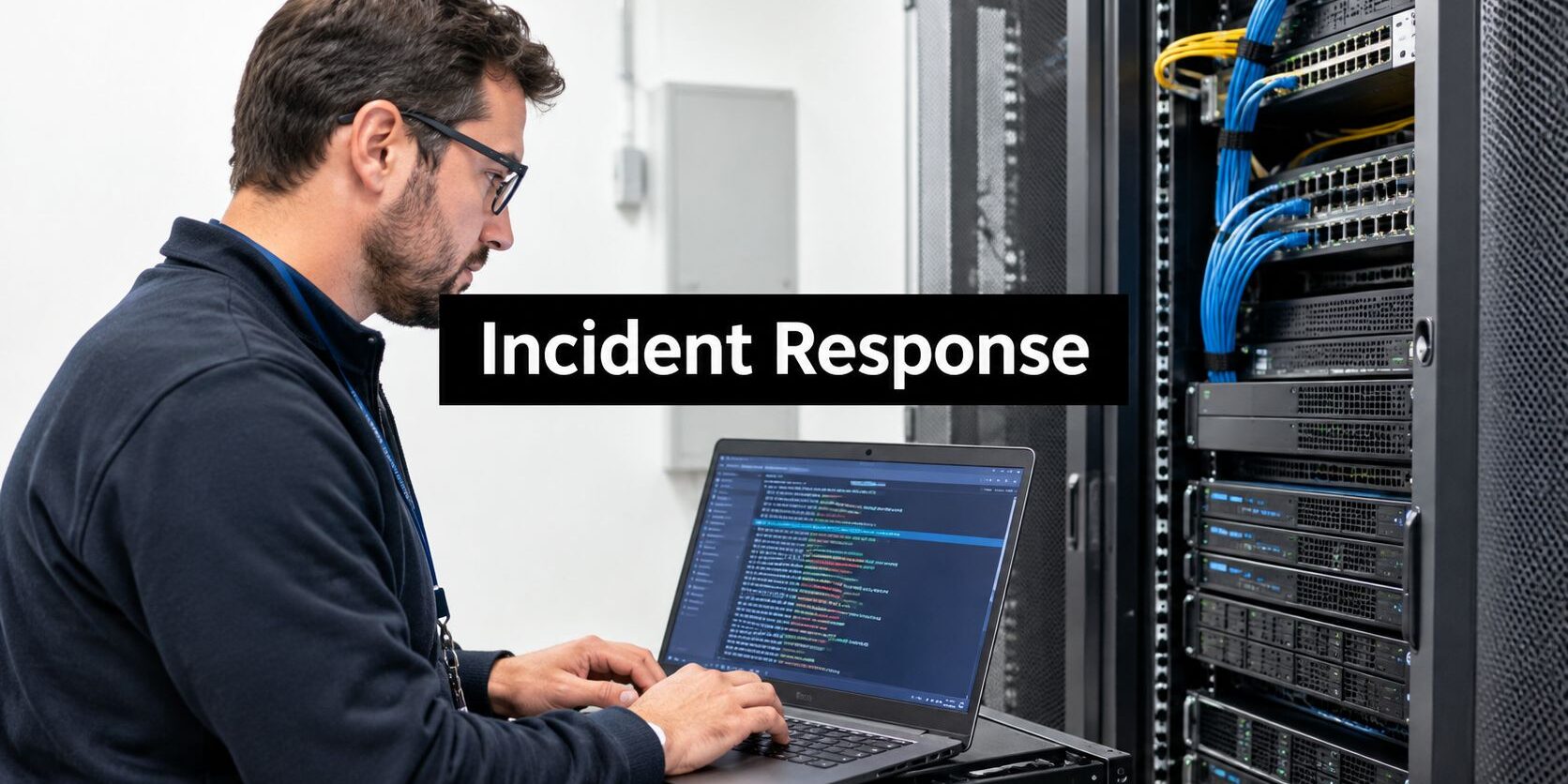
Incident response services provide structured help for detecting, containing, and recovering from cyber incidents, usually through a retainer or on-demand engagement with defined service-level agreements. For a small or mid-sized business, the right arrangement turns a confusing emergency into an organized process with named decision-makers, technical support, and a practical recovery path.
A Dallas business owner may discover the problem before the security team does. At 7 a.m., an accounting office's staff arrives to find shared folders renamed, workstations displaying ransom notes, and the line-of-business application unavailable. The immediate questions aren't theoretical: Who can isolate the network? Which backups are trustworthy? Has client data left the environment? Who contacts the insurer, legal counsel, and customers?
Incident response services answer those questions before or during the event. They aren't a vague promise that an IT provider will “take a look.” They're contracted operational support for investigation, containment, evidence handling, recovery, and improvement.
The discipline itself grew from emergency response into a standards-based practice. The CERT Coordination Center was established in November 1988 after the Morris Worm, and detailed incident-handling guidance was still limited at that time. NIST later published SP 800-61 in 2004, released Revision 2 in 2012, and finalized Revision 3 in April 2025, reflecting the field's maturation into a globally used practice (historical incident response development).
Table of Contents
- What Incident Response Services Actually Cover
- Inside an Incident Response Engagement
- Retainer or On-Demand Choosing the Right Model
- Timelines SLAs and What Fast Really Means
- Roles and Responsibilities During an Incident
- Legal and Compliance Considerations for Regulated SMBs
- Playbook Overview and Engaging an MSP for IR
- Practical Next Steps for SMBs Building IR Coverage
What Incident Response Services Actually Cover
The accounting office's first need isn't a report. It needs someone to establish what happened, stop the spread, and help leadership make defensible decisions while employees wait for systems to return.
Incident response services normally cover four connected work areas:
- Detection and triage: A responder validates whether an alert represents suspicious activity, identifies affected accounts or devices, and establishes an initial scope. A managed monitoring arrangement can support this work through cybersecurity monitoring services, especially when an internal team doesn't watch alerts overnight.
- Containment and eradication: The provider isolates compromised hosts, disables or resets exposed accounts, blocks known malicious access, and removes persistence. Containment isn't merely an administrative approval. It's a technical action intended to prevent additional systems from being affected.
- Forensics and evidence preservation: Investigators preserve logs, system images, volatile evidence, and relevant records while examining the entry point, attacker activity, and possible data exposure. Careful handling supports legal review, insurance coordination, and regulatory decisions.
- Recovery and post-incident reporting: The team helps restore clean systems in a sensible order, validates that the threat has been removed, monitors for re-entry, and documents what happened. Recovery doesn't finish the engagement. A written report should identify control gaps, delayed decisions, and changes needed in the response plan.
The outcomes owners actually buy
A business owner usually isn't purchasing “forensics” as an abstract technical service. The practical outcomes are less downtime, protected data integrity, clearer communications, and better evidence for regulators or insurers. A healthcare practice needs confidence that patient systems and records are handled appropriately. A law firm needs a defensible account of evidence handling. An accounting office needs to restore operations without returning an attacker to the network.
Business continuity planning also deserves attention before an incident. The Professional Insurance Advisors, LLC guidance offers useful context for connecting continuity planning with broader business protection.
The central distinction is simple: incident response is operational muscle, not insurance paperwork. Insurance may help fund response, but an IR provider performs the investigation and coordinates technical action.
Inside an Incident Response Engagement
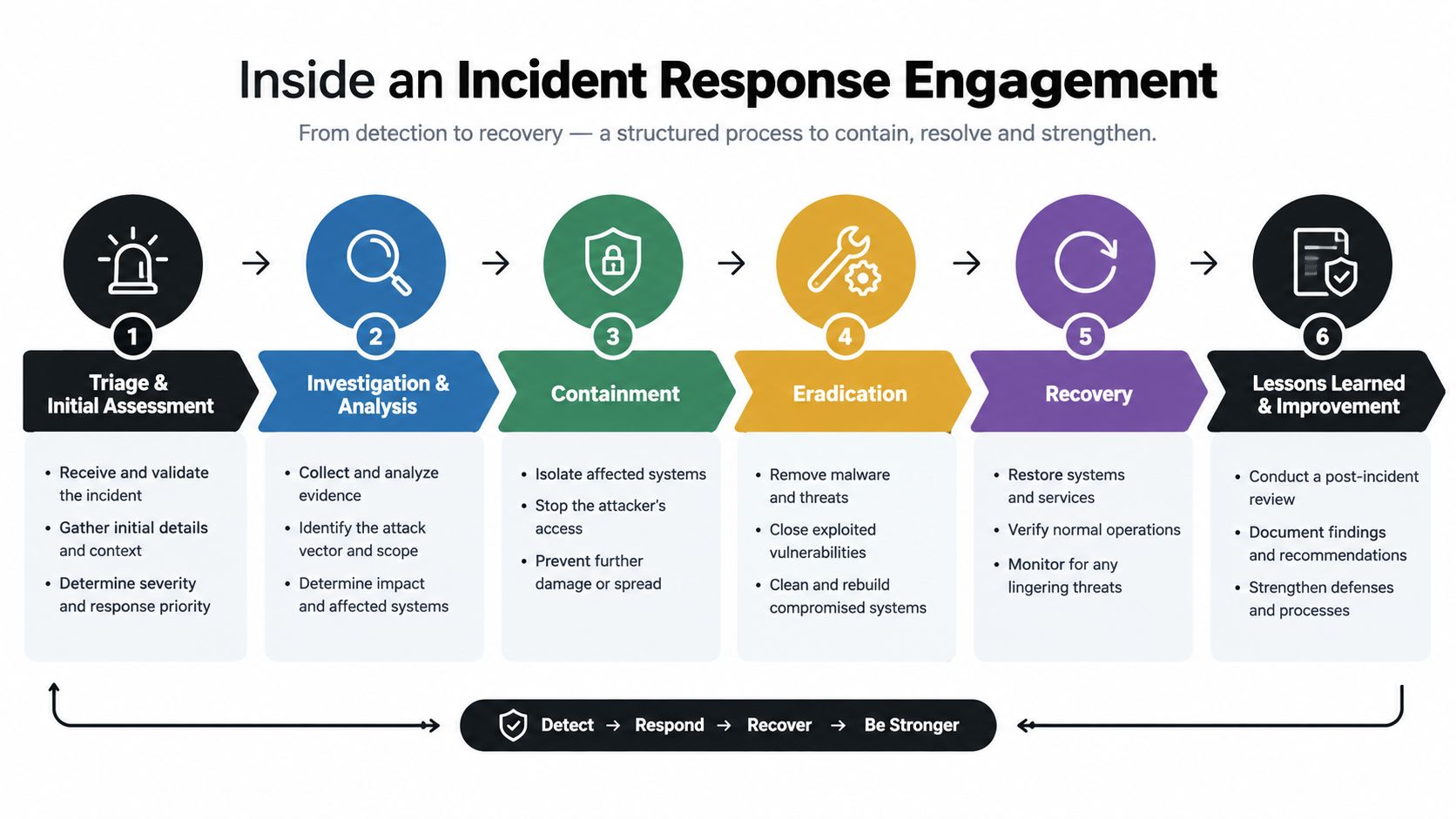
NIST organizes incident response around preparation, detection and analysis, containment, eradication and recovery, and post-incident activity. NIST's newer guidance also connects incident response with the complete Cybersecurity Framework lifecycle, so preparation, risk identification, protection, detection, response, and recovery support one another (NIST SP 800-61 Revision 3).
Preparation becomes part of the live response
Before an incident, the provider reviews critical assets, dependencies, contacts, access requirements, backup arrangements, escalation rules, and evidence procedures. The client identifies which systems support payroll, patient scheduling, financial operations, case management, production, or customer service.
That preparation determines what happens at 2 a.m. An analyst may triage an endpoint alert, compare activity with known business behavior, and contact the designated escalation lead. If the evidence points to compromise, the responder can follow an approved path rather than wait for a new meeting to decide who may isolate the device.
Secure communications matter because compromised email accounts or collaboration systems may be monitored by an attacker. A business should establish alternative channels in advance. Guidance on how to minimize downtime with secure channels can help teams avoid using affected systems for sensitive coordination.
Live response follows a controlled sequence
During detection and analysis, the provider collects alerts, authentication records, endpoint data, network logs, and user reports. The client supplies business context, such as whether a suspicious login reflects a traveling employee or an unusual access pattern.
Containment may involve isolating a compromised server segment, disabling accounts, or restricting communication between network areas. Responders may preserve volatile memory before shutting down a system because valuable evidence can disappear when power is removed.
Eradication removes malicious software, persistence mechanisms, exploited weaknesses, and unauthorized access. Recovery then restores verified clean backups and business-critical services in stages. The client confirms that restored applications work and that operational priorities match the recovery order.
Post-incident activity produces a written account of the timeline, decisions, evidence, business impact, and corrective actions. The engagement doesn't end when systems come back online. It ends when the business understands the cause, closes the relevant gaps, and updates its playbook.
Retainer or On-Demand Choosing the Right Model
A retainer and an on-demand engagement solve different purchasing problems. The retainer reserves response capacity before an emergency, while on-demand service preserves flexibility by avoiding a recurring commitment.
| Dimension | Retainer | On-Demand |
|---|---|---|
| Cost structure | Predictable recurring fee, with response terms defined in advance | No recurring retainer, but incident work may carry higher hourly rates |
| Availability | Reserved access and agreed response SLAs | Availability depends on provider capacity when the event occurs |
| Environment knowledge | Provider can learn the environment before an incident | Onboarding begins after activation |
| Best fit | Regulated or operationally dependent businesses | Smaller offices with limited exposure and a tolerance for uncertainty |
| Main trade-off | Pays for readiness even when no incident occurs | Saves recurring cost but accepts delay and less familiarity |
Some market guidance places monthly IR retainers between USD 500 and USD 5,000, while also describing median breach impacts for smaller organizations around USD 3 million, including downtime and reputational damage. Those figures shouldn't be treated as a quote for a particular business. They illustrate the buying tension: a recurring readiness cost must be weighed against the operational consequences of being unprepared.
When the retainer earns its place
A healthcare practice handling PHI, a payment environment subject to card-data obligations, or a financial firm managing client funds usually has little room for improvised contracting. Notification, evidence, and insurer requirements may begin immediately, so pre-authorized contacts and a known response team have practical value.
A professional office with limited exposure may reasonably choose on-demand coverage as a baseline. The honest caveat is that the worst time to negotiate scope, access, pricing, and authority is during a live breach.
The decision is therefore about risk transfer and readiness, not simple budget optimization. A retainer buys preparation and priority. On-demand coverage buys flexibility while leaving more uncertainty with the business.
Timelines SLAs and What Fast Really Means
“Fast response” has little meaning unless the contract defines the clock. A business should distinguish between acknowledging an alert, completing triage, mobilizing remotely, and sending someone onsite.
Published dwell-time findings show why the distinction matters. Palo Alto Networks reported that dwell time fell to 7 days in 2024 from 13 days in 2023, while Sophos reported a 2024 median of 7 days overall and 11.5 days for non-ransomware cases. Google and Mandiant reported a median dwell time of 11 days for 2024 (Unit 42 incident response report). These figures describe attacker presence, not contractual response promises, but they show that organizations may have days of hidden activity before discovery.
| SLA Tier | Initial Acknowledgement | Triage Complete | Remote Mobilisation | On-Site Arrival |
|---|---|---|---|---|
| Basic business-hours coverage | Defined during covered hours | After initial review | During the next available response window | Scheduled if needed |
| Extended coverage | Defined for nights and weekends | Prioritized under the incident procedure | Remote team engaged outside normal hours | Based on location and severity |
| Priority retainer | Contractual priority response | Escalated according to severity | Reserved responders begin work remotely | Governed by the agreement and logistics |
Questions that expose vague promises
A business should ask whether the SLA runs 24/7 or only during business hours, whether the clock starts at alert creation or human confirmation, and whether weekends and holidays receive the same treatment. It should also clarify whether ransomware negotiation support, insurer coordination, evidence collection, and executive updates are included or billed separately.
Slow response can increase the opportunity for data theft, lateral movement, encryption, and confused decision-making. IBM reported that the global average cost of a data breach reached USD 4.88 million in 2024 (IBM's 2024 data breach cost report). That global figure isn't a prediction for a Dallas company, but it reinforces why response capacity has financial significance.
A provider's service-level agreement information should be read alongside the incident response contract. “Fast” should mean a measurable, enforceable process that a 25-person company can depend on.
Roles and Responsibilities During an Incident
An incident becomes harder to control when every decision appears to belong to everyone. A clear role map gives responders authority to act while preserving executive, legal, and operational oversight.
Provider-side responsibilities
- Incident commander: Coordinates the response, sets priorities, maintains the timeline, and escalates decisions that exceed technical authority.
- Forensic analyst: Collects and examines system images, logs, memory, identity records, and other evidence while documenting handling.
- Threat intelligence specialist: Adds context about observed indicators, attacker behavior, likely access methods, and possible persistence.
- Legal liaison: Coordinates with counsel, the insurer, privacy advisers, and relevant external parties when the event may create notification or contractual duties.
Client-side responsibilities
The executive sponsor authorizes business-impacting decisions, including major isolation measures, emergency spending, and public communications. The IT point of contact explains the environment, grants approved access, identifies dependencies, and confirms whether restoration affects daily operations.
A communications lead manages employee, customer, partner, and public messaging. A records custodian preserves relevant business records, contracts, logs, and documentation so the response doesn't lose important context.
The MSP doesn't automatically own every decision. The client should predefine who may authorize system isolation, who may discuss ransom payment, who approves disclosure, and who speaks externally. Technical responders can recommend an action, but the executive sponsor or legal authority may need to approve it.
Practical rule: The person with technical knowledge isn't always the person with legal or financial authority. Both roles must be named before the incident.
The client's internal team also shouldn't disappear after calling the provider. Staff members supply operational context, validate priorities, protect customer relationships, and approve recovery choices. A documented incident response team structure helps prevent duplicated work and keeps evidence collection separate from routine troubleshooting.
Legal and Compliance Considerations for Regulated SMBs
A cyber incident becomes a legal event when it may involve protected health information, client records, payment data, personal information, contractual confidentiality, or regulated operations. The technical question is “what happened?” The legal question is “what duties does that create, and when?”
Healthcare practices need a process for assessing whether PHI was accessed, acquired, or disclosed and for coordinating any required HIPAA notifications. Texas businesses may also face state disclosure obligations when personal information is involved. Legal firms must consider confidentiality and privilege, while financial and accounting organizations may need to address contractual, regulatory, and client-notification requirements. Nonprofits should review donor, beneficiary, and grant-related obligations as well.
Evidence handling changes the response
IT teams often want to rebuild a machine immediately. That may restore productivity, but it can destroy evidence needed to establish scope and cause. Counsel may direct forensic imaging or collection through an appropriate engagement structure so investigative work receives suitable protection and documentation.
The response plan should specify who preserves logs, how evidence is labeled, where it is stored, who can access it, and how decisions are recorded. NIST's incident handling guidance describes movement from detection and analysis through containment, eradication, recovery, and post-incident improvement, supporting a disciplined approach rather than an improvised cleanup (NIST incident handling guidance).
Cyber insurance adds another coordination layer. Many policies require the policyholder to notify the carrier promptly and use approved vendors or panel counsel. A business that hires an unapproved responder first may create coverage questions, even if the technical work is competent. The cyber insurance process should be reviewed before an incident, including contact numbers, consent requirements, deductibles, and vendor restrictions. A practical review of cybersecurity insurance requirements can help identify questions for the broker and carrier.
The safest operating model is coordinated, not siloed. Legal counsel directs legal strategy, the provider directs technical investigation, leadership directs business decisions, and communications staff manage messages based on verified facts.
Playbook Overview and Engaging an MSP for IR
A useful incident response playbook is short enough to use under pressure and detailed enough to remove guesswork. It should identify the events that activate response, list escalation contacts, provide communication templates, define containment actions, describe evidence handling, and connect recovery steps to business-critical systems.
The artifacts should be usable
A small business should leave onboarding with practical materials:
- Trigger list: Examples include suspected ransomware, a compromised administrator account, unusual data transfer, or a lost device containing sensitive information.
- Contact roster: Internal leaders, the MSP, counsel, insurer, privacy advisers, and communication contacts should be listed with after-hours paths.
- Asset inventory: Critical applications, servers, cloud services, backup locations, and dependencies need clear ownership.
- Containment runbooks: The playbook should explain who may isolate a host, disable an account, restrict traffic, or suspend a service.
- Recovery checklist: Restoration order, backup validation, business approval, and post-recovery monitoring should be documented.
How an MSP fits into existing operations
The engagement usually begins with a scoping call and an environment assessment. The provider reviews systems, monitoring coverage, access procedures, backup dependencies, compliance needs, and existing IT responsibilities. The business then chooses a retainer or on-demand agreement, with scope and response terms written clearly.
A tabletop exercise tests the arrangement before a live incident. During an actual event, the MSP activates the agreed contacts, establishes a secure coordination channel, performs triage, and holds regular status meetings during containment. Internal IT continues to provide environment knowledge and operational support, while executives, legal counsel, and communications handle decisions within their authority.
The final deliverable should include the timeline, findings, evidence summary, business impact, recovery actions, and lessons learned. Thorough onboarding may take a few weeks, but it replaces emergency scrambling with a known process. Technovation LLC can fit into that model by combining monitoring, escalation coordination, documented incident support, recovery planning, and compliance-oriented readiness with a client's existing IT operation.
Practical Next Steps for SMBs Building IR Coverage
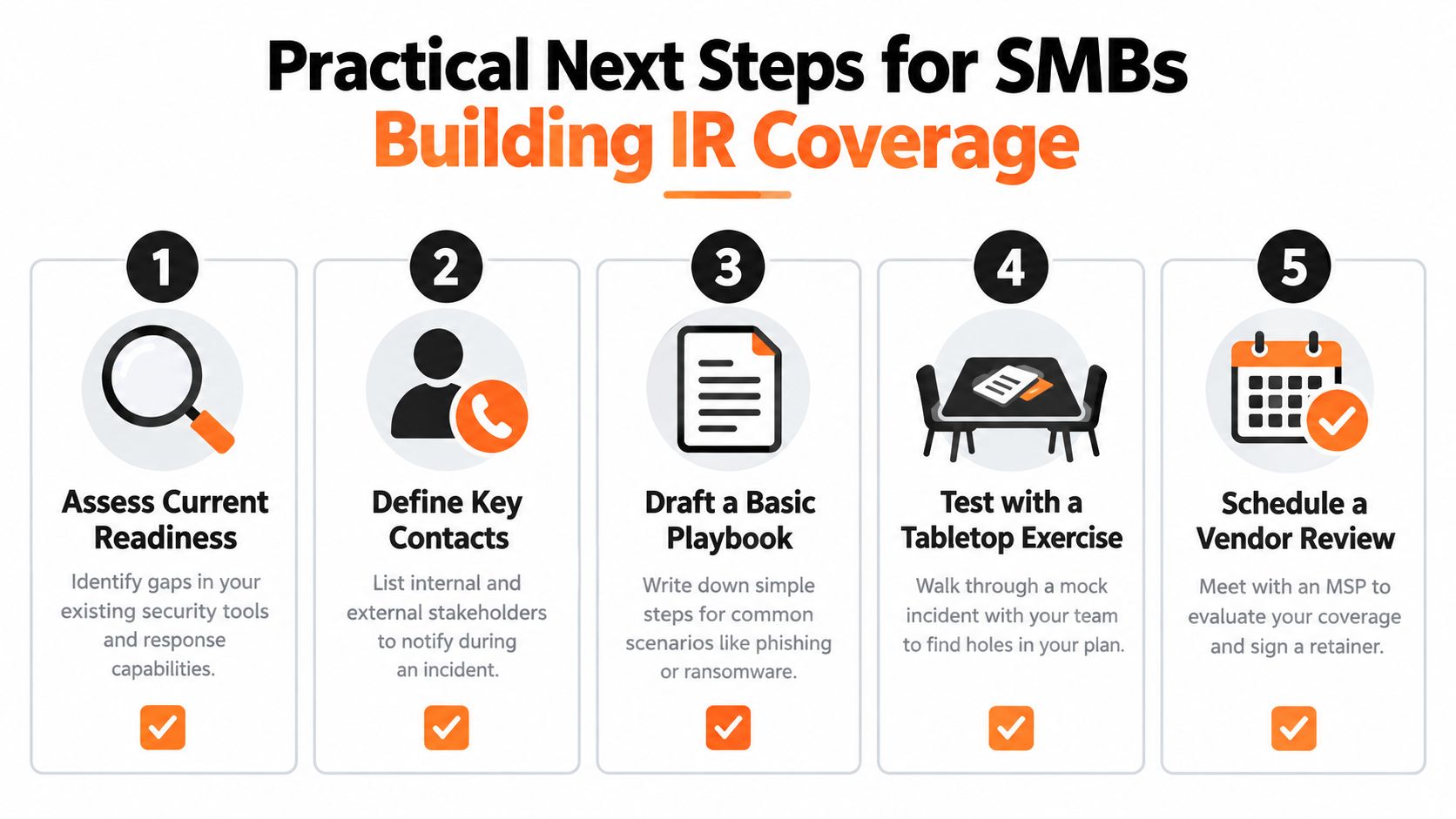
Meaningful incident response isn't reserved for large enterprises. A smaller company can build useful coverage by purchasing the pieces that reduce uncertainty first, then expanding based on operational and regulatory risk.
The following actions can begin this week:
- Inventory critical systems and data. Identify which applications support revenue, payroll, patient care, client work, production, and customer communication.
- Name the after-hours caller. Decide who contacts the MSP, insurer, counsel, and executive sponsor when the normal office is closed.
- Document backup locations. Record where backups live, who can access them, and how the business verifies that a restore is clean.
- Confirm recovery dependencies. Note which systems must return first and which can remain offline temporarily.
- Review the insurance policy. Look for approved vendors, notification instructions, consent requirements, and evidence-handling expectations.
- Request a tabletop exercise. A 90-minute simulation can expose unclear authority, missing contacts, and communication gaps before a real incident.
- Choose the coverage model. Compare the recurring readiness of a retainer with the uncertainty of on-demand response.
- Review remote-work exposure. Distributed staff, home networks, personal devices, and remote access deserve a place in the plan. A practical 2026 guide to remote safety for teams can help businesses identify employee-side risks to discuss internally.
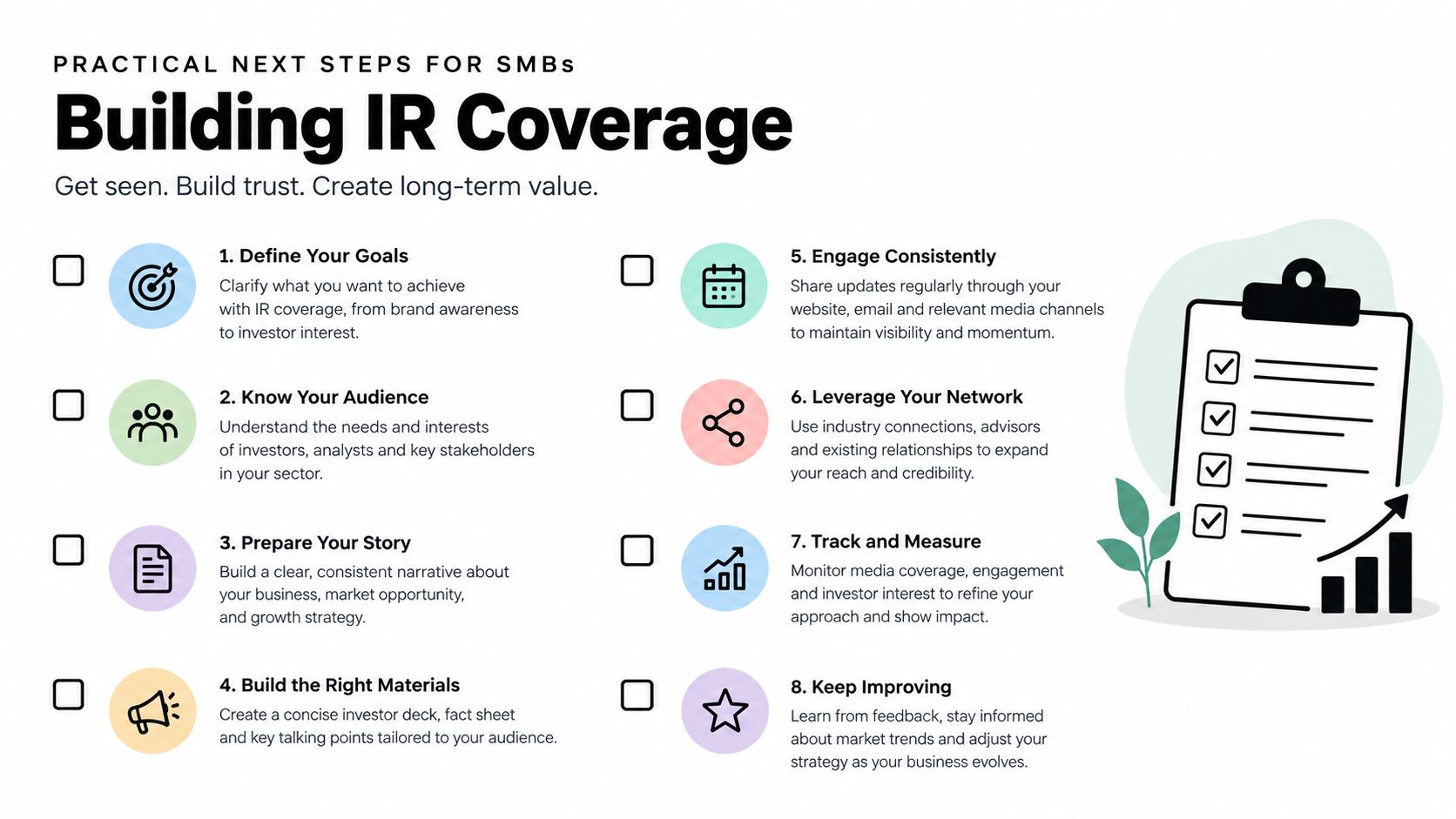
The common mistake is buying a retainer and never testing it. A tabletop should verify that the provider can reach the right people, that leaders understand decision rights, and that restoration priorities reflect the business.
The better question isn't whether an SMB can afford incident response. It's whether the business can afford to discover, during a breach, that nobody knows who acts, what gets preserved, or how recovery begins.
Technovation provides Dallas–Fort Worth businesses with 24/7 cybersecurity monitoring, incident escalation support, response planning, backup and recovery guidance, and compliance-focused IT services. Visit Technovation LLC to request a security review and discuss whether a retainer, on-demand coverage, or a co-managed approach fits the organization's systems, obligations, and budget.